

AI barista coffee machine technology is transforming how we brew espresso at home and in cafés, blending automation, machine learning, and voice control for smarter, more consistent results.
Key Takeaways
- The global AI barista coffee machine market is valued at USD 1.34 billion in 2024 and growing rapidly, particularly in Asia Pacific.
- Current AI models offer deep drink customization, but there’s still limited transparency around specifications or privacy considerations.
- Voice-controlled, AI-powered espresso machines target both homes and busy commercial settings, promising ROI for high-volume operators—but with high entry costs and some feature gaps.
- The Core Concept: What is an AI Barista Coffee Machine?
- Step-by-Step Guide: Getting Started With AI Barista Coffee Machines
- Advanced Analysis & Common Pitfalls
- Conclusion
- FAQ
The Core Concept: What is an AI Barista Coffee Machine?
An AI barista coffee machine is a new class of smart espresso maker that combines robotics, sensors, IoT connectivity, and artificial intelligence. These devices automate complex brewing steps—grinding, tamping, extracting, and milk frothing—while learning your taste preferences over time. Some offer app or voice assistant integration (like Alexa), letting you start and customize drinks hands-free.
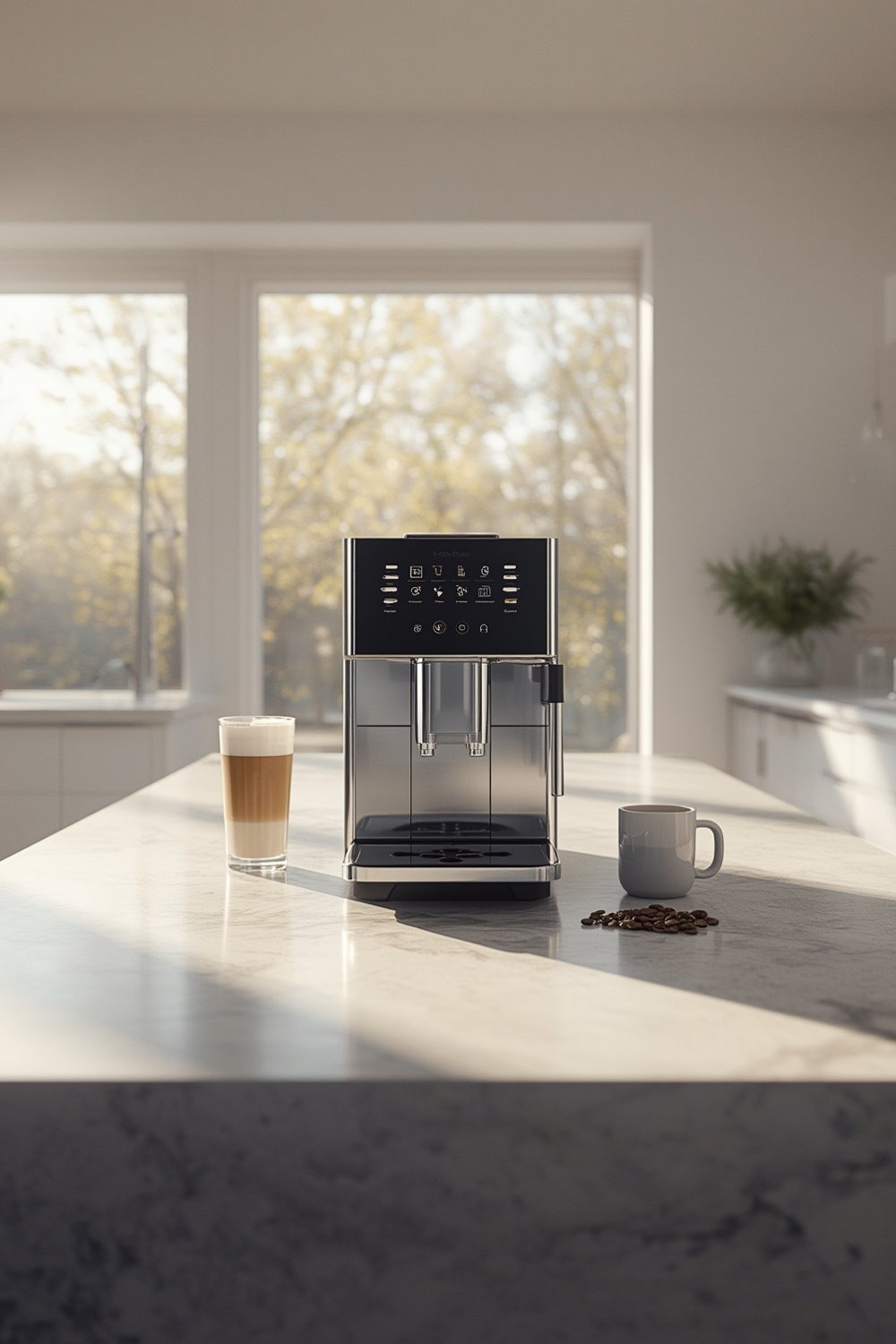
By embedding AI algorithms and often cloud connectivity, these machines can store personalized recipes, maintain consistency cup-to-cup, and make recommendations. This technology is now expanding from high-investment commercial robots (costing upwards of $100,000 for busy shops) down to premium home devices for enthusiasts wanting professional results with minimal effort. The growth is explosive—according to industry market reports, the global robotic coffee barista market hit $1.34 billion in 2024 and is expected to grow over 18% annually.
Drivers for adoption include the desire for speed, labor savings, consistent café quality, and deep personalization. Because these machines use AI to learn and respond to preferences, they surpass traditional programmable coffee makers or even “dumb” super-automatic models. They’re especially attractive to operators seeking labor efficiency (cafés, quick-serve restaurants) and tech-savvy home users who crave customization.
Step-by-Step Guide: Getting Started With AI Barista Coffee Machines
Ready to make the leap to an AI-driven espresso experience? Here’s how to assess, install, and maximize an AI barista coffee machine at home or in a business.
- Research the Models & Features
Study the AI barista coffee machine landscape. Focus on models supporting voice control, user profiling, real-time customization, and cloud services. Commercial setups can cost around $100,000 (e.g., full robotic units), while premium home models from brands like Breville are more accessible but may lack industrial throughput. - Assess Your Space & Connectivity
These machines often require stable Wi-Fi, regular firmware updates, and sometimes integration with other smart devices. Ensure your network and kitchen environment can support the requirements. - Customize Drink Profiles
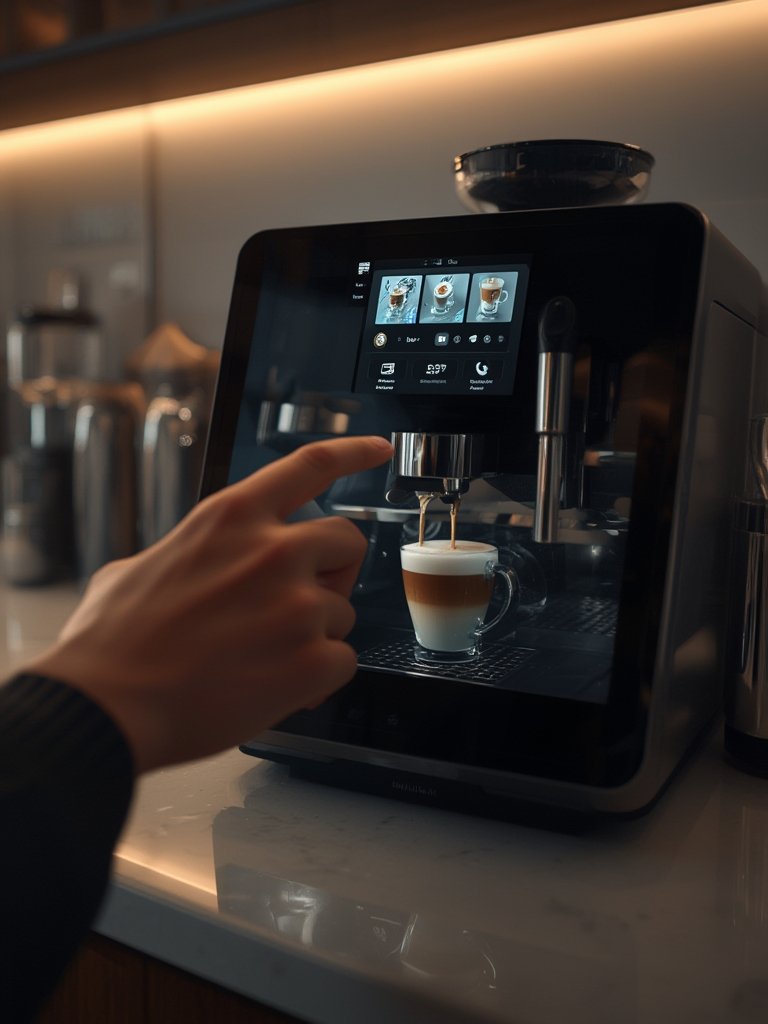
Take advantage of AI features by creating user profiles for everyone in your home or team. Modern machines can remember grind settings, shot timing, milk preferences, and even cup size—learning and improving over time through app input and (sometimes) machine vision sensors.
Recent research highlights how advanced models use sensors and AI to produce consistently high-quality drinks. - Integrate With Smart Home Ecosystems
Brands like Bosch or Breville may offer Alexa or Home Connect app control. Link your coffee machine to routines (e.g., “Good Morning” triggers your favorite latte). For further synergy, combine with a smart fridge grocery list app to track bean inventory and prompt reordering. - Updates, Maintenance & Data Security
AI and connected appliances require regular software updates for new features and bug fixes. Protect your Wi-Fi with strong passwords and limit network exposure. While most consumer devices do not specify detailed privacy protections, always review policies—particularly if cloud data or voice samples are involved.
For more on how AI-driven kitchen devices integrate, see our guide to the Hisense AI induction range review.
Advanced Analysis & Common Pitfalls
Despite breakthrough potential, AI barista coffee machines come with real-world limitations and challenges—especially when compared to the high expectations set by marketing. Here are pitfalls and what’s missing in today’s technology:
- High Cost for Commercial Systems: Fully robotic barista stations for cafés or QSRs can cost roughly $100,000, with ROI only if you’re serving hundreds of cups per day at high margins. For home users, while prices are lower, expect a premium compared to even luxury “dumb” espresso machines.
- Limited Transparency & Comparability: Brands rarely publish clear technical specs (temperature control ranges, grinder calibration, AI features), making it hard to compare models.
- Privacy & Security Questions: Research shows few details about data storage, voice sample security, or IoT vulnerabilities—even on machines that connect to cloud services. Caution is advised for privacy-focused buyers.
- Voice Assistant Gaps: No substantial negative feedback is reported for Bosch 800 Series Alexa Plus or competitors, but the lack of complaints could reflect a low install base or underreported issues—particularly around voice accuracy in busy locations.
- Feature Cliff at Lower Price Points: Cheaper models may drop features like comprehensive drink profiling or deep learning-driven recommendations, sticking to basic timers and recipe memory only.
| Feature | High-End AI Barista Machines | Entry-Level AI/Voice Machines |
|---|---|---|
| Personalized Drink Profiles | Extensive multi-user memory, learns over time, app and cloud sync | Basic (simple recipe memory, per-user limited) |
| Voice Recognition Accuracy | Integrated, supports noisy environments, feedback if misunderstood | May mishear in kitchens, limited languages or voice profiles |
| Security & Data Privacy | Often not disclosed in detail; risk with any cloud/connectivity | Rarely discussed, little user control |
| Cost | $100,000+ (commercial robot), $2,000–$5,000 (premium home) | $500–$1,500 |
| Maintenance & Support | Remote diagnostics, predictive maintenance, OTA software updates | Manual troubleshooting, inconsistent support |
Competing smart kitchen appliances—like IKEA’s microwave air fryer combo—are also racing to match this AI-driven customization, but are not as mature as espresso tech in terms of drink personalization.

Conclusion
The world of AI barista coffee machines is moving at light speed, from expensive, high-throughput café robots to ever-smarter home units you can activate with your voice. While deep customization, convenience, and automation are reshaping coffee culture, buyers must assess cost, transparency, and privacy trade-offs. As AI features evolve, expect rapid improvements—especially in user experience and ecosystem integration. If you value convenience and café-style drinks at home or want a cutting-edge setup for your business, now is the time to consider an AI barista coffee machine.
Ready to upgrade your mornings? Explore connected kitchen gear, tune your routines, and get ahead of the smart kitchen curve.
FAQ
How does an AI barista coffee machine learn my preferences?
Most advanced models use machine learning algorithms to track your choices—grind size, temperature, drink type—and refine recipes over time based on feedback. Some require manual input; others use app data or sensors.
What is the price range for an AI-powered coffee machine?
Home models with real AI and voice control range from $500 to $5,000, depending on features. Full commercial robotic stations cost about $100,000 or more, targeted at high-volume cafés and QSRs.
Are AI coffee machines secure when connected to my Wi-Fi?
There’s little public data on privacy or security for these machines. Use strong passwords, regular firmware updates, and review the manufacturer’s privacy policy—especially if the device stores voice commands or user profiles in the cloud.
Can I integrate my AI barista machine with other smart appliances?
Yes, many support Alexa, Google Home, or brand-specific ecosystems (like Home Connect). You can automate drink routines, sync with smart fridges for ingredient tracking, or link to recipe guides via your phone.
Do these coffee machines require a lot of maintenance?
Premium AI machines often have automated cleaning programs and can send alerts for maintenance based on usage patterns. Still, all require regular descaling, cleaning, and care for long life and consistent drink quality.
[…] on time? Some AI coffee machines automate cold foam routines and textural settings (though with a hefty price […]
[…] the oven, related smart kitchen tools like the GE Profile Smart Fridge Barcode Scanner and AI barista coffee machines are solving prep and beverage automation, […]